Monday, May 10, 2010

Essential Analects- 15, 17, 18


“Of course the gentlemen encounters hardship. The difference is that petty man, encountering hardship is overwhelmed by it.” 15.2 Once again everyone; gentlemen. I begin to understand more deeply the actual definition of being a true “gentleman” whatsoever. In my way of interpreting the text, a gentleman is what we would currently describe as the ideal person, citizen, etc. In Confucianism, it apparently refers to the goal a man must attempt to reach. "The gentleman takes rightness as his substance, puts it into practice by means of ritual, gives it expression through modesty, and perfects it by being trustworthy. Now that is a gentleman!" 15.18.
A line I found both inspiring and applicable to my life morals was the following: "When the multitude hates a person, you must examine them and judge for yourself. The same holds true for someone who the multitude loves." 15.28. Wow. It seems as if this was a quote from a motivational conference or something. What called my attention the most was how true and, more than anything, honest this was. In the world we live in, we base many decisions on appearances and stereotypes, rarely stopping to judge others fairly. Hmm, something to think about.
“To make a mistake and yet to not change your ways- this is what is called truly making a mistake.” 15.30. This is something most of us have heard before, the whole story about learning from your mistakes in order to prevent them from happening again, so I found it cool that such concepts were mentioned in the Analects as well.
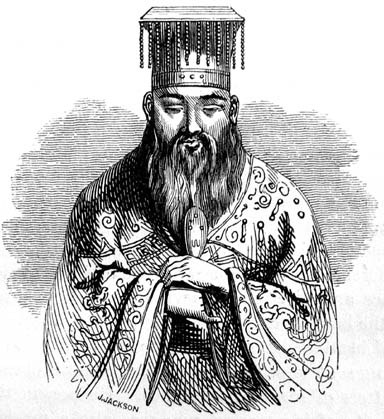
Book seventeen was a combination of topics, and to vary a little, involved some more dialogue between the Master and his pupils. Six new terms were introduced to us: Goodness, Wisdom, Trustworthiness, Uprightness, Courage, and Resoluteness. “Loving Goodness without the love of learning will make you love foolishness. Loving Wisdom without the love of learning will make you love deviance. Loving Trustworthiness without the love of learning will make you love harmful rigidity. Loving Uprightness without the love of learning will make you love intolerance. Loving Courage without the love of learning will make you love unruliness. Loving Resoluteness without the love of learning will make you love willfulness.
A line I would like to talk about is the last one in the book that personally cleared out any previous doubts I had developed on the sexist tone of the Analects, “Women and servants are particularly hard to manage: if you are too familiar with them, they grow insolent, but if you are too distant, they grow resentful." 17.25. What exactly does this even mean? Women are being directly compared to servants. This is interesting due to the fact that women are also put down in previous reading we have done like Gilgamesh or the Bible.
Finally, in Book eighteen, the actual Confucius is introduced to us. However, this creates even more doubts in me as to who the Master is anyways?
Essential Analects- 7,8,11

I enjoyed the fact that these chapters skim though a variety of topics. First of all, in my opinion, the analects present an interesting view at things. However, I had a hard time getting the hang of it especially because of all the extra information and confusing wording involved.
In book seven, particular topics arose. “If wealth were something worth pursuing, then I would pursue it, even if that meant serving as an officer holding a whip at the entrance to the marketplace. Since it is not worth pursuing, however, I prefer to follow that which I love” 7.12. It was interesting to see what an important role love is given, even to the point where it steps over wealth and the many luxuries that accompany it. Also it allows us to understand the importance of love in society, something that even the wisest of the wise noticed and acknowledged.
“Is Goodness really so far away? If I simply desire Goodness, I will find that it is already here.” 7.30. This excerpt was also worth observing. How I interpreted it, it made reference to the fact that Goodness, or any particular thing it is we are looking for, is found by perseveration rather than hastily searching for ways to get there.
Book eight was concise and short. It kept mentioning the term “ritual” which I found to be a rather abstract and undefined concept. “If you are respectful but lack ritual you will become exasperating; if you are careful but lack ritual you will become timid; if you are courageous but lack ritual you will become unruly; and if you are upright but lack ritual you will become inflexible.” 8.2. What exactly are they referring to as having “ritual”? Isn’t it something you perform?
Sunday, May 9, 2010
Psalms

Thursday, May 6, 2010
Confucian Republic
- Bow twice to those older than 30-ALWAYS
- Manage all relationships succesfully, otherwise you will fall out of balance and die.
- No reggeaton. Only classical music or you will be flogged by Laura.

TTBA2

Tuesday, May 4, 2010
TTBA
We will head towards Villa de Leyva, located approximately 3 hours away from Bogotá, a somewhat large, colonial town. I've been there before and it is a rather magical place. A clear colonial, mysterious mood fills the environment and you can almost feel like the place just froze in time. These characteristics make it the amazing place it is, attracting more and more tourists each year. Thus, we didn't have a hard time when we chose to go there.

A group of my friends have an extraordinary hobby; motorcycling. I must say I'd love to do so myself, if it was somehow possible.. But since I can't, I have them :D! On every opportunity I have, I join them on one of their trips, where an adrenaline rush is part of the take-list. How could I reject such an invitation? I didn't hesitate, not even for a second. Be sure and expect a detailed summary of how it all went, and in the meantime keep checking for updates.. See ya.